 Posted by
 Mallorca belongs to the autonomous region of the Balearic Islands. This is roughly equivalent to a federal state, although not entirely accurate and the comparison is therefore not entirely correct. The Balearic Islands are governed from the capital of Mallorca, Palma. This means that the government of the entire Balearic Islands is located on Mallorca. In addition, the Mediterranean island, together with Ibiza and Menorca, has one of the three island councils. Mallorca’s political influence has grown steadily in the past.
Politically, the Balearic island of Mallorca is divided into 53 municipalities, each with an administrative seat. These 53 municipalities form the 6 landscape zones, which do not have their own administrative seat and therefore have little significance for the administration of Mallorca. The official languages of the island are Spanish and Catalan. The Catalan dialect spoken on Mallorca is called Mallorqui and is now also a recognized official language.
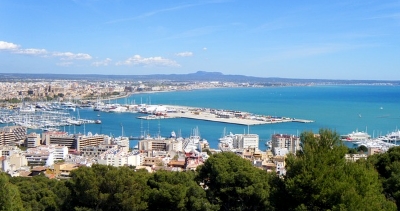 Palma is the largest city and capital of the island
In addition to Alaró, the 53 municipalities of the island are also Alcudia, Algaida, Andratx , Ariany, Artà, Banyalbufar , Binissalem, Búger, Bunyola, Calvià, Campanet, Campos as well as Capdepera, Consell , Costitx , Deià, Escorca, Esporles, Estellencs, Felanitx, Fornalutx, Inca, Lloret de Vistalegre, Lloseta , Llubí, Llucmajor, Manacor, Mancor de la Vall , Maria de la Salut , Marratxí , Montuïri , Muro , Palma , Petra , Pollença, Porreres, Puigpunyent, Santa Eugènia, Santa Margalida , Santa Maria del Camí , Santanyí , Sant Joan, Sant Llorenç des Cardassar, Sa Pobla, Selva, Sencelles, Ses Salines, Sineu, Sóller, Son Servera, Valldemossa and Vilafranca de Bonany. Most of these municipalities also have a town or village of the same name. The administrative headquarters of the respective municipality are usually located in these towns or villages. It is rare for a municipality on the island of Mallorca not to have a town or village of the same name, or if it does have one, the administrative headquarters is not in that town. There are also a few other towns on the island. In addition to Sarenal, these are also Cala Bona, Cala d’Or, Cala Figuera, Cala Llombards, Cala Millor, Cala Rajada, Cala Santanyí, Cales de Mallorca, Can Picafort, Costa de Canyamel, Colònia de Sant Jordi, Colònia de Sant Pere, es Llombards, Magaluf, Orient, Palma Nova , Peguera ,Portocolom , Portocristo , Portopetro , Port de Pollença, Randa , Sa Calobra , Sa Coma , Santa Ponca , Son Serra de Marina , sa Ràpita , Son Carrió and Son Macià. In some communities there are numerous German residents who have established their permanent residence here, which is why, in addition to the three official languages, German is also a language that is spoken in many places on Mallorca.
This is particularly true in areas where there are either a lot of Germans living or where tourism is very popular. This is mainly because most of the island’s tourists are German. But people from Great Britain also come to the island in large numbers as holidaymakers, which is why English is often spoken or at least understood in many places.
Map of Mallorca
FAQ: Administration on Mallorca
What administrative region is Mallorca part of?
Mallorca is part of the Balearic Islands. It belongs to Spain and is one of the country’s autonomous communities.
Is Mallorca a country?
No, Mallorca is not a country. It is an island within Spain.
What is the capital of Mallorca?
The capital of Mallorca is Palma. It is also the administrative center of the Balearic Islands. See: Palma de Mallorca.
Who governs Mallorca?
Mallorca is governed by local, regional, and national authorities. These include the Balearic government and Spanish government.
What is the Balearic government?
The Balearic government is the regional authority. It manages local administration for Mallorca and nearby islands.
Does Mallorca have its own government?
Yes, Mallorca has local administrative bodies. However, it is part of Spain’s national system.
What language is used in administration?
Spanish and Catalan are official languages. Both are used in administration.
Is English used in Mallorca?
English is widely spoken in tourist areas. However, official documents are in Spanish or Catalan.
What municipalities are there in Mallorca?
Mallorca is divided into municipalities. These include towns like Palma, Inca, and Manacor. See: Manacor.
What is a municipality in Mallorca?
A municipality is a local administrative unit. It manages services like infrastructure and planning.
Does Mallorca have provinces?
No, Mallorca is part of the Balearic Islands province.
What services does local administration provide?
Services include public transport, waste management, and urban planning.
Is Mallorca well organized administratively?
Yes, Mallorca has a well-structured administration. Services are reliable.
Do tourists need to deal with administration?
No, tourists rarely need administrative services. Most travel is straightforward.
What documents do you need to travel to Mallorca?
You need a valid ID or passport. Mallorca is part of Spain and the EU.
Is Mallorca part of the EU?
Yes, Mallorca is part of the European Union.
What currency is used in Mallorca?
The euro is used. See: Mallorca Prices.
Are there taxes for tourists in Mallorca?
Yes, there is a tourist tax. It is usually included in accommodation costs.
What is the tourist tax in Mallorca?
The tourist tax varies depending on accommodation type. It is typically a few euros per night.
Is Mallorca easy to travel administratively?
Yes, travel procedures are simple. Especially for EU citizens.
Are there health services in Mallorca?
Yes, Mallorca has good healthcare services. Public and private options are available.
Is Mallorca safe in terms of administration and law?
Yes, Mallorca follows Spanish and EU laws. It is a stable and safe destination.
Do you need visas for Mallorca?
EU citizens do not need a visa. Other travelers should check requirements.
Is Mallorca part of Schengen?
Yes, Mallorca is part of the Schengen Area.
What makes Mallorca’s administration unique?
The combination of local autonomy and integration into Spain and the EU.